Small Blue Thing

Greg and I had planned to go to Kansas City tonight to see Suzanne Vega in concert. She has always been special to us, as we listened to her a lot in the early years of our relationship. We love the images in her lyrics and her simple singing style. When we bought the tickets a few months ago, it seemed so doable. But riding in a car really aggravates my pain, and Kansas City is a three-hour drive. As the time has approached, I realized that it would take a lot out of me–not just the drive, but then sitting for several hours for the concert, sleeping in a strange bed at a hotel, and then another three hours home the next day. To a lot of people, it wouldn’t seem like much. But when you have chronic pain, certain things take their toll and you have to weigh whether it will be worth it or not. A weekend like that would probably take me a month to get back to my normal level of manageable pain. I asked Greg to rate on a scale of 1 to 10 how much he wanted to go. If he had said anywhere from an 7/8 to a 10, I would have gone. But he said a 6. I don’t know if he was being honest, or if he realized it would be hard for me. Anyway, we’re not going, and it’s okay. Really okay. That is the wonderful thing about being married to your best friend. Plans change and it’s okay. We’ll listen to her records instead. Greg is into buying vinyl records now…I think of all the ones we’ve sold at garage sales over the years, and now he’s buying them again 🙂

Here is a video of her performing our favorite song of hers, Small Blue Thing and the lyrics are below (they are not formatting right, and I’m getting frustrated trying to make it work–UGH).

Lyrics:
Today I am
A small blue thing
Like a marble
Or an eye
With my knees against my mouth
I am perfectly round
I am watching you
I am cold against your skin
You are perfectly reflected
I am lost inside your pocket
I am lost against
Your fingers
I am falling down the stairs
I am skipping on the sidewalk
I am thrown against the sky

I am raining down in pieces
I am scattering like light
Scattering like light

Today I am
A small blue thing
Made of china
Made of glass

I am cool and smooth and curious
I never blink
I am turning in your hand
Turning in your hand
Small blue thing

Month One Update on My Word-of-the-Year

Lily and Larry, basking in the sunlight

Lily and Larry, basking in the sunlight

It’s late January, the temperature is in the low 70s, and the windows are wide open with the curtains blowing. I just noticed Lily and Larry basking in the sun. It made me think of my word-of-the-year, “open”.

So far, me and “open” just aren’t clicking.

I wrote in my first Word-of-the-year post how I was going to be more open at work and try to get to know more of my coworkers. Not a day after I wrote that, we got an e-mail saying that to “conserve agency resources” we were to minimize chatting about things unrelated to work. Now I’m pretty sure this e-mail was not directed at me; however, it raised my anxiety. I can’t believe I’m 50 years old, and I still have this irrational fear of getting into trouble. When I told Greg about it that evening, he challenged me to talk so much that I do get into trouble! So far, that hasn’t happened.

I also wrote that I wanted to be more open to taking risks. I haven’t done too well with this either. Last week, I was asked to give a presentation.  I’ve had a long-standing fear of public speaking, which I have worked hard to overcome. I typically perform quite well in the actual situation, but make myself seriously miserable ahead of time. The last presentation I gave was 2 years ago and I swore I would never do it again. So when this invitation came up, I had an initial sick-to-my stomach reaction. I was proud of myself for being assertive and saying I needed to think about it (I usually just smile and say yes). I was even honest with the person asking me and told her about my anxiety. That was a different response for me. I’m sure I agonized way too much about it: Should I join Toastmasters again? Should I consult with someone who coaches people on their speaking skills?  Was I setting a bad example for people who read my books on shyness and social anxiety if I don’t keep doing things out of my comfort zone?  It was on a topic I knew well, but I realized I would still make myself a neurotic mess over it–-not to mention making my poor husband miserable, as well. Greg asked what it would take for me to want to do the presentation, and I couldn’t think of anything. I ended up saying no. This decision was fairly predictably  followed by days of cycling between feeling awful about myself and struggling to find compassion for myself. And a lot of tears.

Then I got mad. For several days, I wanted to change my word from “open” to “average”. I decided there is too much pressure on people these days to be above average. I get tired of reading that you should dream big (see my Tiny Dreams post). I get tired of reading that anything is possible if you simply put your mind to it. Sometimes I don’t want to have a good attitude. Sometimes I don’t want to think positively. And I’ve had so many fears in my life, I get tired of facing them all. I wonder if I’m up to it anymore.

Today I’m of the mindset that I’ll keep the word “open” as my word-of-the year, but I’m going to give myself some slack. I’m telling myself, “I’m being open to not feeling open.” Doesn’t that count?

Like the warm weather, this too shall pass.


Self-Compassion In Practice

One of the best parts of blogging is meeting people from all over the world. Dr. Alice Boyes is a psychologist in New Zealand who also writes at Psychology Today. She just interviewed me for her blog called In Practice. It’s a good overview of my self-compassion project so far. You can read it here.

Screen shot 2013-01-25 at 6.10.23 PM

Montage Magic

One really cool thing I’ve discovered this year is that you can take an e-course on about any subject you can imagine, and most of them are priced very affordably. I am two weeks into a 3-week video making class called Montage. The class teaches you the technical aspect of using iMovie on a Mac, but it also has a fun, creative side in which you learn to put your heart and soul into the movie and tell a story. I’ve made two videos so far.

Here’s the first one. All of the footage was taken at my brother and sister in law’s home in Gerald, Missouri. It’s just under two minutes. Short and sweet.

Leaving Worry Behind

This is the second one, also about two minutes. The footage was taken in my backyard. I feel more self-conscious in this one because I do some speaking. I don’t know, does anyone like hearing their own voice? Well, hope you like it.

Busy Be Gone

The class has been great and well worth the money. I think I’m really going to like having a new creative outlet.

To be notified of new posts, head on over to my Self-Compassion Project Facebook page and click “Like”. (It’s also on the sidebar, but no one ever sees it there.)

Long Days, Short Summer

Gretchen Rubin said, “The days are long but the years are short.” That’s how I feel about this summer. Some of the days dragged for me, especially dealing with more pain than usual (see my post Tiny Dreams). But now I don’t know where the time went. Everyone is back in school and fall is near.

Despite the pain, there are definitely fun times I will remember about this summer. I feel a little silly sharing them–they’re not exciting things like going on vacation or anything like that. But they mean something to me.

* Watching the HBO series, Flight of the Concords, as a family for the third time. It’s hard to describe the show’s appeal; you’d probably either love it or hate it. The series revolves around a pair of folk singers from New Zealand as they try to achieve success as a band in New York City. It’s off-beat and quirky. I love it that we all three laugh out loud through every episode. (Well, I’ll be honest. Greg did fall asleep once.)

* Turning a large walk-in closet in the basement into a makeshift recording studio for our son. We pinned old comforters all over the walls and had blankets lining the ceiling. A folding chair and old table for his laptop, plus his guitars, mandolin, banjo, harmonica, ukulele and some other new instruments ordered off the Internet (a melodica?) made for a cozy space. It was pretty insulated, but occasionally I’d hear some random clapping wafting through the vents. I’m so happy our home could be a place where he could create his own wonderful (also off-beat, quirky, and make-you-smile) kind of music.

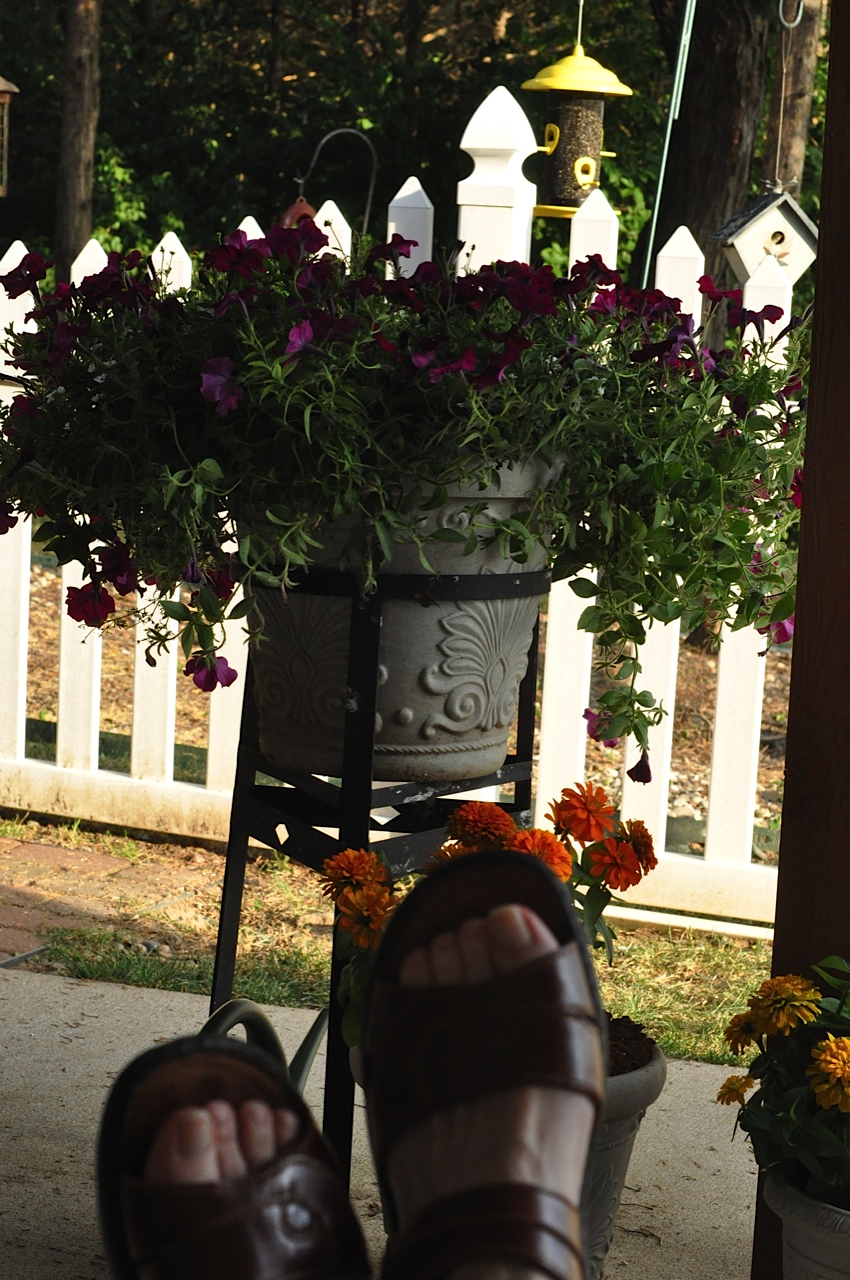
*Spending lots of time sitting on the covered patio just watching the birds and hearing the neighborhood kids playing. I really embraced just being, and didn’t worry that I didn’t “accomplish” much of anything this summer (see my post Busy Be Gone).

I’d be tickled pink if you’d like my self-compassion Facebook page–you can click here. You can also follow me on Twitter by clicking here. I’m turning into a social media junkie 🙂

Here is Gretchen Rubin’s heart-warming one-minute video, The Years are Short.

Exposure and Adaptation

Enjoying the patio first thing in the morning

Glasses:  I have always thought I wanted glasses—it would be another fun fashion accessory. My friend, Amy, has always had the cutest glasses and looked so stylish. One of my previous secretaries bought frames on sale so that she was able to have several pairs of glasses to match various outfits (my fave–red frames with red shoes!) So when I went to my eye appointment this year and he said I actually needed glasses, I had a moment of euphoria. Yeah! What trendy frames would I select?

Yet the whole process has been weeks of frustration for me. Now that I needed glasses, I didn’t want them. I ended up not getting super trendy frames because at nearly $500, I needed a pair that would go with everything.  My vanity kicked in big time and I thought they made me look old. I also worried that my mostly silver jewelry didn’t go with the frames, and I couldn’t afford to go out and buy all new jewelry (although that would have been fun.)

Most of all, I have had problems adjusting to the progressive lens which were prescribed. I’ve been back to the eyeglass shop three times, and each time they’ve encouraged me to give it a while longer. I’ve talked obsessively to Greg about it. Where do I look? Why can’t I make this part come in focus? They make my nose hurt. I’m getting a headache. I can see the edges of the frames. The world simply looked weird, and I felt groundless.

I finally realized that I’m fighting too hard and I’m definitely not being self-compassionate. I wish it hadn’t taken me three weeks to figure this out 🙂 I’m expecting this to be easy and feeling like there’s something wrong with me for not adapting more quickly. The eye doctor told me it would take three weeks of wearing them nonstop (DO NOT TAKE THEM OFF, he said). I beat myself up and called myself “noncompliant” because I did not do as he said. I’d make it for several days wearing them all the time, get frustrated and take them off, only to start over the next day. The eyeglass shop people were very kind and told me I was not unusual. They’d heard all these complaints about progressive lenses many a time. Yet I still felt like there was something wrong with me.

I think I’ve forgotten just how complex the brain is, and how this is a really tricky thing I’m asking my brain and eyes to do. From now on, I will gently remind myself that change is hard for most people, not just me.  I’ll also remember that people adapt at different rates, and I will give myself the time I need.

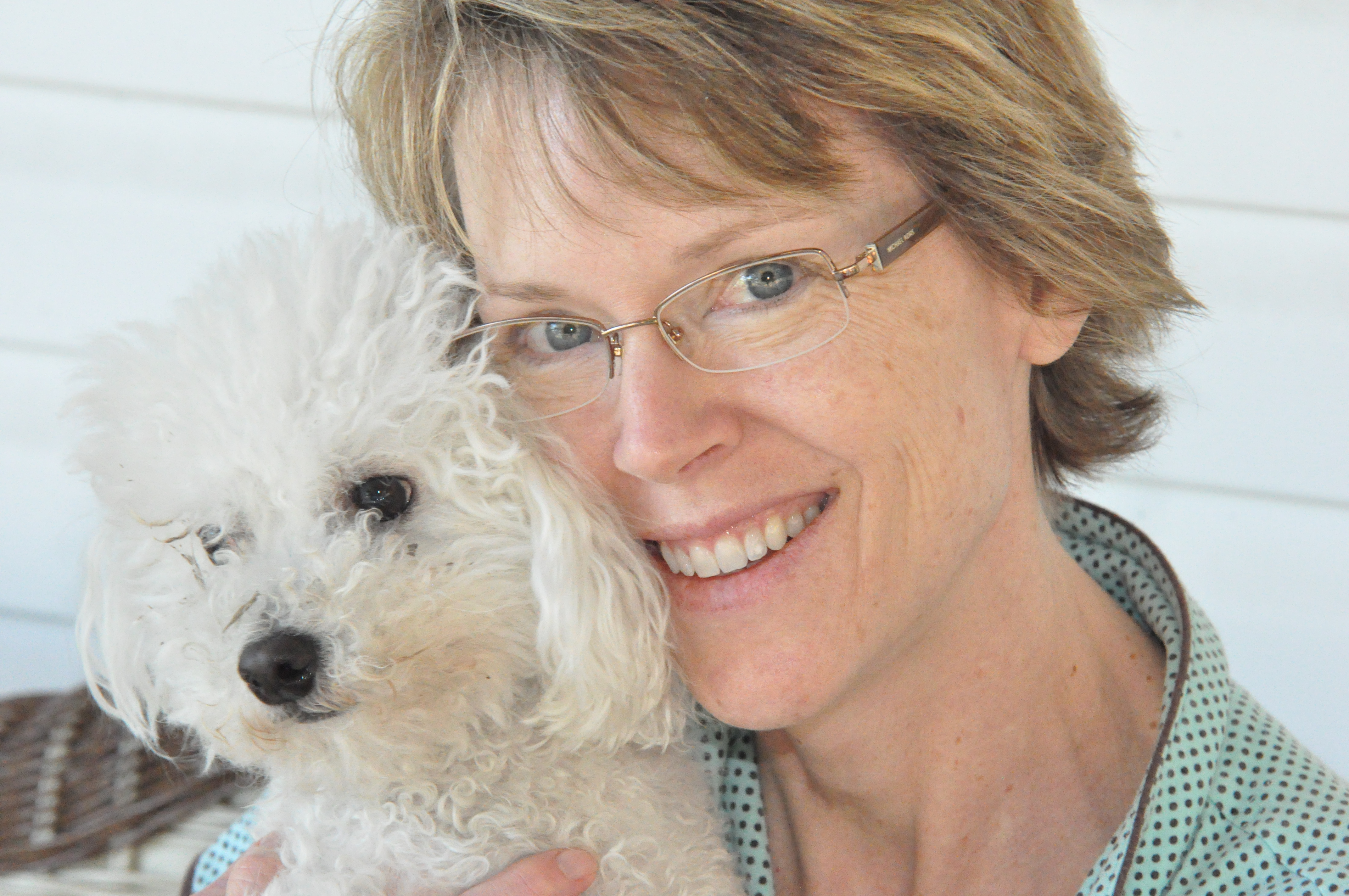
Oh, and I don’t think I’ve every posted a picture of myself sans make-up. Talk about exposure! I’m working on the vanity thing.

Weather: You can’t be a Missourian and not talk about the weather. This is a screen shot of the temps we’ve had lately, and there’s no rain or relief in site. It’s strange, once it’s over 100 degrees,  you don’t really notice the difference. I’ve desperately been trying to keep my flowers alive. A few have bit the dust. I should’ve taken a picture of the dead ones to remind me that everything changes; everything dies; it’s just a matter of time. I’ve been giving the birds fresh water several times a day. We’ve created quite the oasis for our feathered friends. I’ve mostly been doing my bird watching through a window these days. I rearranged some furniture downstairs just so I’d have a special place to enjoy their antics. Sometimes there are four birds splashing in the birdbath at once. It makes me smile!

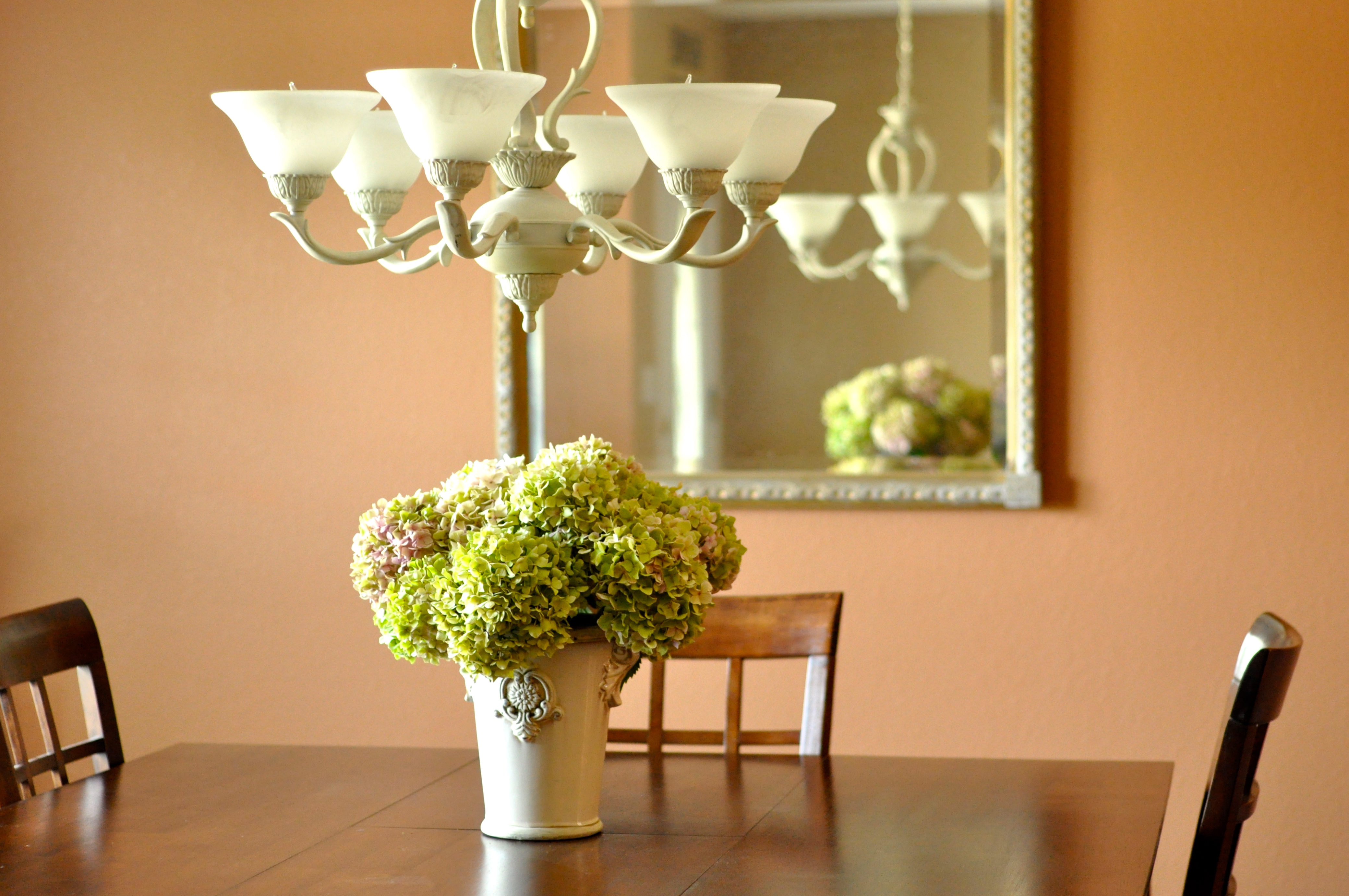
Hydrangeas from our yard and
my grandmother’s antique mirror

Photography: Now that I have glasses where I can see close up and far away, I’m going to try to learn photography. I actually had some decent photography and darkroom skills as a journalism major in college, but I have forgotten everything I used to know. Up until now, I’ve just bossed Greg around telling him what pictures I need for the blog—actually, the system has worked out pretty well! But I think it will be good for my brain to focus on learning something new. This picture took me about an hour, with Greg’s help.

The heart and mind are the true lens of the camera.

         –Yousuf Karsh

When It’s OK (even advisable) To Quit

Recently, a friend of mine took a full-time job, and then had to resign soon thereafter due to a number of factors. I know she struggled with the decision. I understood her angst. I have taken on too much of late, and I’m having to rethink some of my goals. It feels like such a failure I can’t do everything I set out to do. But how many of us set unrealistic expectations for ourselves? My husband says I do (and he’s usually right).

When I googled quitting, there were literally pages of inspirational quotes about why quitting is bad. (You know, quitters never win, and all that stuff.) But I did find a Chinese Proverb that took a different view: “Of all the strategems, to know when to quit is the best.”  Yea!

But how do you know when is when? When is it okay to quit and when should you tough it out?  These are some very loose guidelines I came up with for myself:

It’s okay to quit…

…when you’ve gathered new information that makes the original plan unworkable;

…when the timing is wrong;

…when you thought you could do more than you can;

…when you’re changing directions;

…when to keep going will deplete you of energy you need for something else (or allows you to regroup your energy);

…when you made a mistake;

…when quitting is the most compassionate thing you can do for yourself at the moment (my personal favorite).

This is the shortest blog post I’ve ever written. I really thought about developing each and every point above, and giving more examples. But sometimes you have to know when to quit…

(Note: This is an old post from a different blog, but someone I care about is going through a rough time with a decision, and I think this may speak to her.)

Coping with Chronic Illness…Compassionately

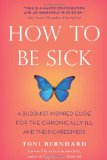
Although Toni Bernhard’s book is called How to be Sick, I found it a lovely and poignant read on how to live, regardless of one’s health status.

Toni was a law professor at the University of California–Davis when she became ill on a trip to Paris in 2001. At the time, she was diagnosed with an acute viral infection–“the Parisian flu” they called it. Unfortunately, she never got better. Amazingly, she wrote How to be Sick from her bed using a laptop. The book won the 2011 Gold Nautilus Book Award in Self-Help/Psychology and was named one of the best books of 2010 by Spirituality and Practice.

Toni has not recovered her health, but her spirit remains strong. She writes regularly for Psychology Today and generously donates her time and wisdom. I was so excited when she graciously agreed to be interviewed for my blog.

When do you accept your pain or health condition as is, and when do you keep trying new approaches?

In my opinion, we have to do both. Acceptance is not the same as indifference or resignation, which carry aversion with them. Acceptance to me is an opening of the heart to the difficulties we face and being able to say, “This is how things are right now” even if “how things are” is difficult. I try to accept how I am AND continue to pursue new treatments. But I’ve learned a lot in the past eleven years about having to pick and choose skillfully among those treatments.

First, of course is the cost. I’ve spent so much money on failed treatments that it’s been a strain on our budget. At the point when the strain outweighs any benefit I can foresee, I stop (I did this recently with the third Chinese herbalist, even though he’s one of the most respected herbalists in the world).

Second, I’ve had to learn to not just jump at every treatment option, but think about it carefully and see if it’s at all reasonable. I used to try everything. Now, I’m very careful.

So, you have to find a middle way — but to me, acceptance of how you are now AND continuing to pursue treatments are not in conflict with each other.

I have also gone through periods where I’m just too exhausted to keep an eye out for treatments. I just retreat, as if I’m in hibernation, and that seems to be good for me sometimes too.

How do you have self-compassion when you’re feeling sick and tired?

I always tell people that the single most important thing they can do is to be kind to themselves. I look at it this way. We control so little in our lives, but the one thing we can control is how we treat ourselves. I see no reason for us not to be as kind and gentle with ourselves as we can be. It’s not our fault that we have health problems. We’re in bodies and they get sick and injured. It will happen to everyone. This is how it’s happening to us. I’ve had so many people write to me and say the single most important thing they got out of my book was to give up the self-blame and forgive themselves for being sick or in pain. Many people have said they didn’t even realize they hadn’t forgiven themselves until they read How to Be Sick. Those emails always touch me so much — just to know I’ve been of help to them.

I really think it helps to speak to yourself with words of self-compassion — to find just the right words for the moment: “It so hard to be sick yet another day.” I said to my husband yesterday, “I’m sick of being sick.” But, instead of “feeding” that thought with stories I spin: “I’ll never get well.” “I’ve been cheated of eleven years of my life,” I’ve learned to just let myself feel “sick of being sick” and speak to myself kindly about it. It’s natural for that emotion to arise so I try not to make it stronger by feeling it with worse-case-scenario stories. Instead, I’m just gentle with myself until the emotion passes — as it will.

How do you deal with uncertainty and unpredictability that goes along with chronic illness?

I use what I call “weather practice,” which I describe in my book. It was inspired by the movie, The Weather Man, which takes us inside the meteorologist’s craft where we see that the weather is unpredictable and ever changing. I use this as a metaphor for life. It helps me hold painful physical symptoms and blue moods more lightly. I can’t predict when they’ll arise but I know for sure that they’re just blowing through, like the wind. It makes it easier to wait them out. It applies to what happened yesterday when I suddenly got that “sick of being sick” feeling. I wasn’t expecting it to descend on me but it did. So I let it be there, knowing that it was an arising and passing mood. Sometimes, I do something particularly nice for myself — put on a movie — until the mood passes.

I also like to remind myself that uncertainty and unpredictability can work in my favor. We assume they’ll be a source of stress, but they could also mean that something unanticipated but wonderful is just around the corner. So, I like to remember that these two can be our friends.

How do you pace yourself (not doing too much on good days, then paying for it later)?

Now you’re asking about something I’m not very good at doing. I get off the hook a bit because my symptoms are pretty consistent from day to day — relentless you could call them. So for me, it’s not a question of overdoing it on a good day v. a bad day, but of overdoing it when something I enjoy is going on — like my son and his family coming up for the day from Berkeley. I try to pace myself but usually overdo it anyway. Then what do I do? Self-compassion again! There are some limits to which I can’t stretch myself, but visiting in the living room for longer than I should is one of them. And so I do it, and accept that paying the consequence was worth it.

How do you deal with anger?

I’ve been angry about my inability to be with my family more than I can. Sometimes, I do have to leave the living room and it’s hard to listen from the bedroom to all the laughter and good times I’m missing. But I’ve learned that getting angry doesn’t get me anywhere. It certainly doesn’t allow me to visit longer. All it does is increase our suffering.

Anger will arise. Don’t be upset with yourself for getting angry. It’s a natural response to your situation. The question is, how can you respond skillfully to it so as to minimize the suffering it causes. Here’s what I do. I note that it’s there, often by labeling it, “Feeling angry” or “This is what anger feels like.” I don’t get angry at myself for being angry — that’s just a judgment that makes the anger worse. In fact, I try to treat it like a guest I know well — an uninvited one perhaps, but still a guest. I find if I do this, it doesn’t fester and grow stronger. Then I look for what’s behind the anger. Almost always it’s some form of desire — I’m not getting what I want or I’m getting what I don’t want. It’s that “want/don’t want” I refer to in the book.

Just finding the desire that’s the source of the anger often loosens its grip on me, because I know, deep down, that we simply can’t fulfill all our desires and that if I continue to be angry about it, it will only make me more miserable and, in the end, won’t get me what I want. So, with this awareness that anger is present and that it’s because of a desire I can’t fulfill, I just let it be. Just sit with it. Just let it be until it gradually changes, weakens, and passes out of my mind. This is one of the ways in which the law of impermanence can be our friend!

Again, I’m so thankful to Toni for sharing her wisdom.  

To soak up more of Toni’s inspiration, click here.

Take What You Need

I’ve been feeling both antsy and lethargic since Sharon Salzberg’s “official” meditation challenge was over in February. I almost hate to admit it, but I went a few days without meditating. I thought about it. But I didn’t do it.

I noticed a few things. First of all, I didn’t feel as good, just in general. I was more tired than usual, and I spent a lot of time lying on the couch. Now this could be for any number of reasons (a lot of people have been getting sick around here). It did cross my mind, though, that I was going through meditation withdrawal—or maybe even Sharon withdrawal 🙂 The second thing I noticed was a bit of a shocker: I wasn’t beating up on myself.  In the past I would’ve condemned myself for being a “fraud”—here I spent a month blogging about meditation and then I quit. Yet, I remembered Sharon’s words from Week One. The “magic” in meditation is learning that we can begin again. Maybe we made a poor choice about something; we can begin again. Maybe we said some unkind words to someone; we can apologize and begin again. Maybe we ate too many Oreos; we don’t have to wait for tomorrow (or Monday morning) to start eating healthier. We can begin again, right now.

Of course, I didn’t have these revelations with out a tiny bit of struggle.

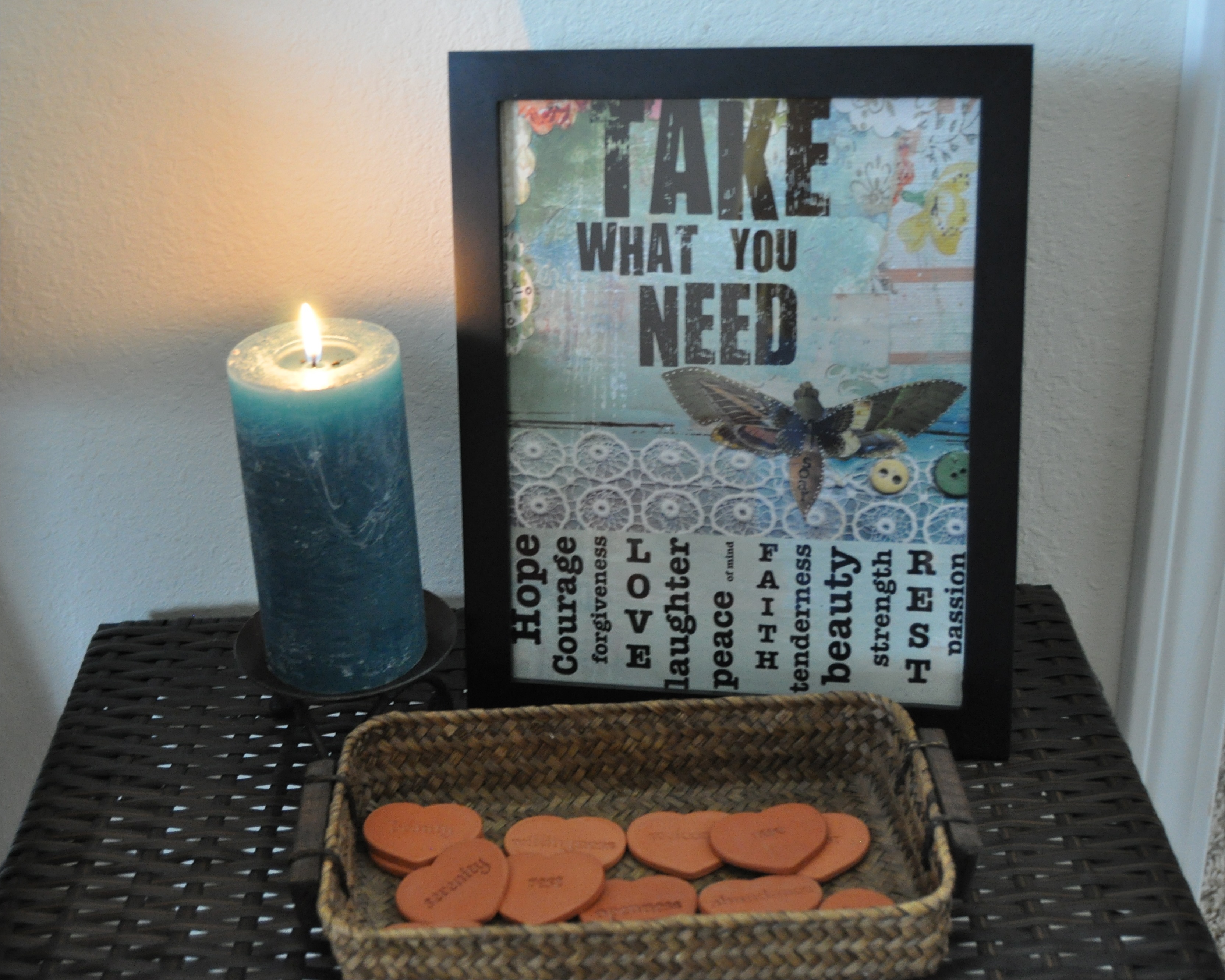
Yesterday I was pacing around the living room, feeling wound up and agitated, and I told Greg, “I just don’t know what I need.” Fortunately, he sometimes knows what I need better than I know myself. He said, “Why don’t you go and meditate?” Hmm. That sounded okay. So I went into the room that I have dedicated to this practice. I have a picture on a little table that says, “Take what you need.” I lit a candle, gazed at the picture, and enjoyed some soothing music for a while. Then I listened to Sharon Salzburg’s breathing meditation, and followed with some more meditating on my own.

I love the saying, “Take What You Need.”* But what if you don’t know what you need? What then? What if I hadn’t had Greg to nudge me in the right direction? I felt so relaxed and peaceful after meditating. Why had it taken me days to figure out that’s what I needed?

Of course, I always like things to be wrapped up in a neat little package. I asked Greg to help me brainstorm “tips” for how to figure out what you need. It seems like all good blog posts need tips. (My niece would add “LOL” at this point.) Without pausing, Greg replied, “When you don’t know what you need, just let yourself be.” Well, that sounds poetic, but it wasn’t very satisfying to me. I still had the urge to “operationalize” it more. Here’s what I came up with:

  • Accept the fact that you don’t know what you need.
  • Give yourself compassion for not knowing what you need. Say things to yourself such as, “It’s hard when you don’t know what you need.”
  • Try some things on for size: Do you need to call a friend? Do you need to take a warm bath? Perhaps make a cup of tea? Do something you’ve been putting off?
  • Realize that you may need more than one thing. Just try one and see how it goes. You can always change. You can always begin again.

I wonder whether, over time, meditation will help me be more in tune with what I need at each moment. I’m betting the answer is yes. But I’ll let you know.

(If you enjoyed this post, click on over to my Facebook page and hit like. I post shorter tidbits about self-compassion, share good links, and let you know when I’ve written something new. Thanks for your support!)

*See Kelly Rae Roberts blog for some of her awe-inspiring artwork and the idea behind this picture.

This, too.

From Pinterest

I’d about worked myself into a full-blown worry attack. There are a lot of things up in the air right now in which timing is key and I don’t have control of many of the variables. I felt crabby, and I craved a big bowl of New York Super Fudge Chunk ice cream. My inner rebel kicked in and my self-talk sounded something like this: “I should meditate, but I don’t want to meditate. I’m sad the 28-day Meditation Challenge with Sharon Salzberg is over, and I probably won’t be able to keep the practice going on my own. Who am I kidding? I’m not the meditating type!”

Before I could go much further (as if that wasn’t far enough), the words popped into my mind, “This, too.”* Now where did that come from? The words came to me in a quiet, kind tone of voice, unlike the critical tone I’m so accustomed to hearing in my head. I can’t believe it. Only a month of meditating and I can’t even indulge in a good worry episode? This was new for me. I felt a gentleness with myself that hadn’t been there before. My worries were still there, but I felt some space…a little more room to maneuver. The quiet voice continued:

Things end. This, too.

Things aren’t in my control. This, too.

I don’t want to do things, even when they’re good for me. This, too.

I worry. This, too.

I laid down on the couch and took some deliberate deep breaths. I said some lovingkindness phrases for myself and others. And then I took a nap.

This, too.

*I’m sure I’ve heard the phrase “This, too” somewhere. I’m getting paranoid that with all the reading I’m doing, that others’ words are seeping into my consciousness and I don’t know to whom to attribute them. Whoever came up with this phrase, thank you. It’s a really good phrase.

(If you enjoyed this post, click on over to my Facebook page and hit like. I post shorter tidbits about self-compassion, share good links, and let you know when I’ve written something new. Thanks for your support!)