Now I Become Myself

Now I become myself. It’s taken

Time, many years and places;

I have been dissolved and shaken,

Worn other people’s faces,

Run madly, as if Time were there,

Terribly old, crying a warning,

‘Hurry, you will be dead before-‘

(What? Before you reach the morning?

Or the end of the poem is clear?

Or love safe in the walled city?)

Now to stand still, to be here,

Feel my own weight and density!

The black shadow on the paper

Is my hand; the shadow of a word

As thought shapes the shaper

Falls heavy on the page, is heard.

All fuses now, falls into place

From wish to action, word to silence,

My work, my love, my time, my face

Gathered into one intense

Gesture of growing like a plant.

As slowly as the ripening fruit

Fertile, detached, and always spent,

Falls but does not exhaust the root,

So all the poem is, can give,

Grows in me to become the song,

Made so and rooted by love.

Now there is time and Time is young.

O, in this single hour I live

All of myself and do not move.

I, the pursued, who madly ran,

Stand still, stand still, and stop the sun!

May Sarton

may_sarton

Compassion for the Self-Critic

Sounds TrueThese are notes I took from last night’s session of  The Self-Acceptance Project presented by Sounds True. It’s not a word-for-word transcription, but it will give you the basics and a feel for Kristin’s warm tone. It’s still online and free, so check it out.

Session 1: Compassion for the Self-Critic

In this episode, Tami Simon speaks with Dr. Kristin Neff, an associate professor of Human Resources and Culture at the University of Texas at Austin. Kristin is the author of the book Self-Compassion and the creator of the Sounds True audio learning course Self-Compassion Step by Step. She and her family were also the subjects of the 2009 documentary and book The Horse Boy.

Why is self-compassion getting so much more attention these days?

1. Societal shifts – the false promise of the self-esteem movement.

2. A general shift – a recognition that the heart has to be an equal player along with the mind.

What is the difference between self-esteem and self-compassion?

Self-esteem is a positive evaluation of oneself. Unfortunately, the way we have gotten our self-esteem has been by comparing ourselves to others, and it’s not seen as good enough to be average. So everyone has to be above average, and there’s obviously a flaw in that logic.  An unintended consequence of the self-esteem movement in the schools has been creating a generation of narcissistic and entitled children.

In contrast, self-compassion is not about evaluating yourself positively. It’s about how you relate to yourself.

Why are we so self-critical?

Self-criticism taps into the threat/defense response. This system is hard-wired and worked great when the threat was a lion running after us. The system is designed to protect us and keep us safe. But when the threat is to our self-concept, self-criticism does not work well. When you view yourself as the problem (I can’t believe I gained those 5 pounds back, I should’ve gotten an A on that test) the reptilian brain kicks in and attacks yourself, thus the self-critical self-talk.

Self-compassion moves you from the reptilian brain to the mammalian caregiving system of tending/befriending. Mammal’s young are designed to attach closely with the mother to stay safe. Mammals respond to warm, soft touch and a soothing voice. So a great self-compassion technique is a physical gesture of affection, such as putting your hand on your heart and saying words to yourself in a supportive, soothing tone. Research is showing that the tone of voice in how we talk to ourselves is very important.

We have to let go of self-criticism as the problem, though. We have to have compassion for the self critic. Self-criticism comes from a desire to keep ourselves safe. So we first have to have compassion for the critical voice. The self-critical voice needs to be heard, and then paradoxically it can quiet down. Then you can bring in self-compassion techniques. You can say to  yourself,  “I want to keep you safe too, but I want to do it in a more effective way.”

You talk about self-compassion having three components. Can you talk more about that?

Yes, the first component is self-kindness, which we just discussed–talking to ourselves in a kind, gentle way and offering ourselves the support we need.

Another aspect of self-compassion is recognizing our common humanity. In essence, acknowledging that everyone is flawed: this is part of the human experience. It helps to remember that you’re not alone in what you’re feeling. Isolation also has an evolutionary explanation. If you get disconnected from the group, you get eaten by the lion…so it’s very scary! That’s why we need to remind ourselves that suffering, being flawed and imperfect, is a part of life.

The third component is mindfulness: being able to recognize in the moment when you’re suffering. It’s amazing how much negative self-talk goes on just under your awareness. We teach formal meditation, but research is showing that the informal self-compassion techniques we’re teaching are just as effective. Self-compassion isn’t that hard. We have these skills that we use for our friends or our children. We just have to remember to do it for ourselves.

Why do we have such trouble with being compassionate with ourselves?

There are really two very closely related reasons. One, when we criticize ourselves, we reinforce the illusion of control. Self-judgment says that if only I would have tried harder, things would’ve worked out. It’s scary to admit how little control we sometimes have. Two, we really believe that we need self-criticism to motivate ourselves. This is the number one reason people give for not wanting to be self-compassionate. They are afraid they’ll be lazy or not do what they need to do. However, when we are in a self-critical place, this is the worst possible mindset in which to do our best.

In conclusion, Kristin led viewers in a “Self-Compassion Break.” 

Think of something you’re struggling with. Assume a self-compassion posture, such as the hand on the heart. Say to yourself in a kind tone of voice, “This is a moment of suffering,” or “This is really hard right now.” – “Suffering is a part of life; I’m not alone in this. Other people feel the same way.”—“May I be kind to myself in this moment and may I give myself the kindness I need.”

I just signed up for this. It’s free and it looks great!

Month One Update on My Word-of-the-Year

Lily and Larry, basking in the sunlight

Lily and Larry, basking in the sunlight

It’s late January, the temperature is in the low 70s, and the windows are wide open with the curtains blowing. I just noticed Lily and Larry basking in the sun. It made me think of my word-of-the-year, “open”.

So far, me and “open” just aren’t clicking.

I wrote in my first Word-of-the-year post how I was going to be more open at work and try to get to know more of my coworkers. Not a day after I wrote that, we got an e-mail saying that to “conserve agency resources” we were to minimize chatting about things unrelated to work. Now I’m pretty sure this e-mail was not directed at me; however, it raised my anxiety. I can’t believe I’m 50 years old, and I still have this irrational fear of getting into trouble. When I told Greg about it that evening, he challenged me to talk so much that I do get into trouble! So far, that hasn’t happened.

I also wrote that I wanted to be more open to taking risks. I haven’t done too well with this either. Last week, I was asked to give a presentation.  I’ve had a long-standing fear of public speaking, which I have worked hard to overcome. I typically perform quite well in the actual situation, but make myself seriously miserable ahead of time. The last presentation I gave was 2 years ago and I swore I would never do it again. So when this invitation came up, I had an initial sick-to-my stomach reaction. I was proud of myself for being assertive and saying I needed to think about it (I usually just smile and say yes). I was even honest with the person asking me and told her about my anxiety. That was a different response for me. I’m sure I agonized way too much about it: Should I join Toastmasters again? Should I consult with someone who coaches people on their speaking skills?  Was I setting a bad example for people who read my books on shyness and social anxiety if I don’t keep doing things out of my comfort zone?  It was on a topic I knew well, but I realized I would still make myself a neurotic mess over it–-not to mention making my poor husband miserable, as well. Greg asked what it would take for me to want to do the presentation, and I couldn’t think of anything. I ended up saying no. This decision was fairly predictably  followed by days of cycling between feeling awful about myself and struggling to find compassion for myself. And a lot of tears.

Then I got mad. For several days, I wanted to change my word from “open” to “average”. I decided there is too much pressure on people these days to be above average. I get tired of reading that you should dream big (see my Tiny Dreams post). I get tired of reading that anything is possible if you simply put your mind to it. Sometimes I don’t want to have a good attitude. Sometimes I don’t want to think positively. And I’ve had so many fears in my life, I get tired of facing them all. I wonder if I’m up to it anymore.

Today I’m of the mindset that I’ll keep the word “open” as my word-of-the year, but I’m going to give myself some slack. I’m telling myself, “I’m being open to not feeling open.” Doesn’t that count?

Like the warm weather, this too shall pass.


Imperfection

photo taken by Greg after a recent ice storm

photo taken by Greg after a recent ice storm

I found this on a Google list serve about self-compassion. It is too perfect (irony caught) not to share.

IMPERFECTION

I am falling in love
with my imperfections
The way I never get the sink really clean,
forget to check my oil,
lose my car in parking lots,
miss appointments I have written down,
am just a little late.

I am learning to love
the small bumps on my face
the big bump of my nose,
my hairless scalp,
chipped nail polish,
toes that overlap.

Learning to love
the open-ended  mystery
of not knowing why

I am learning to fail
to make lists,
use my time wisely,
read the books I should.

Instead I practice inconsistency,
irrationality, forgetfulness.

Probably I should
hang my clothes neatly in the closet
all the shirts together, then the pants,
send Christmas cards, or better yet
a letter telling of
my perfect family.

But I’d rather waste time
listening to the rain,
or lying underneath my cat
learning to purr.

I used to fill every moment
with something I could
cross off later.

Perfect was
the laundry done and folded
all my papers graded
the whole truth and nothing but

Now the empty mind is what I seek
the formless shape
the strange  off center
sometimes fictional
me.

Elizabeth Carlson : Source: Teaching With Fire

Some Favorite Blog Pictures from 2012

A big part of the fun of this blog has been working with Greg on the images. He’s such a great photographer. I keep thinking I’ll learn to take my own pictures, but then I wonder why?  I can be the director and tell him what I want and voila, I get it! So here are some of my favorite photos he’s taken for my blog this year.

Larry loves to dream, big or small, it doesn't matter

DSC_0254DSC_0055

Hearts Set Free

noname-1leafnoname-7noname-5noname-7

Busy Be Gone

Brene´ Brown recently posted this on her Facebook page: “It’s so easy to buy into the idea that if we stay busy enough the truth of our lives won’t catch up with us. When they start having 12-step meetings for busy-aholics, they’ll need to rent out football stadiums.” This clearly resonated with people.  1,183 people liked it and 80 people commented. I replied, “Great idea, but I might be too busy to go.”

I love her writing, but sometimes Brene´ uses such big concepts, I’m not 100% sure what she means. I definitely relate to the part about busyness, but I’m not positive what it means about the truth of our lives catching up with us. Maybe I’ll figure it out as I’m writing. Maybe it will be a separate piece.

In my post, The Grass Always Grows Where You Water It, I wrote: “It’s May 1st, and I usually would have already had my monthly goals mapped out in my mind (and on paper). But not this month. I’ve been busy living, so that’s a good thing!” I also added that I wasn’t even worried about not having any formal goals. Well, I lied. I’ve been scared out of my mind. I’ve been doing a lot of not being busy, and I wonder if I’ll turn into some sort of sluggish sloth!  What if I never set another goal again?

Busy has always been a good thing in my family. It means you’re being productive. My family is of German descent, and I think it’s a cultural thing. During weekly Sunday phone calls, my mother cheerily told me to “Have a productive day.” In talking with another woman of German heritage, she said her mother said exactly the same thing! She also told me about a German word,  sitzfleish. It literally means the virtual flesh that exists between one’s behind and the chair. Figuratively, it refers to the ability to persist in one’s work, the patience that can endure anything, and the idea that work is more important than play.

I’ve certainly had a lot of sitzfleish in my life. I’ve prided myself on being able to plow through work and sit there until the job is done. And I’m not knocking the value of being able to keep your butt on the chair. It’s a skill that has served me well over the years, especially spending oodles of study time earning a doctorate and pounding out four books.

For me, busy has been fun. It has often meant being fully focused and engaged, in a state of creative flow.

My problem is that I take it too far. I don’t know when to stop, take a break, get up from the computer, walk around, stretch, move, breathe. Can you have too much creative flow? Sometimes I think so. I can get so immersed in what I’m doing that I forget to eat—and that’s saying something! (Maybe there’s a book in there…Write Yourself Thin.)

Ethan Nichtern, a popular Buddhist teacher, talks about the Tibetan concept of coemergence. He defines it as  “the ability of any particular phenomenon or experience to manifest as either wisdom or confusion, helpful or harmful, a weapon or a prison. So busy is not good or bad, it’s what we do with it.

I’ve never been good at finding balance in my life. I’m an all-or-nothing kind of girl. Greg teases me about it all the time. For example, when I want to change the thermostat in the house (and being a middle-aged woman that is about every five minutes), I ask him, “Are you hot or are you freezing?”

If there’s one good thing that has come from my chronic pain, it’s that it’s making me more mindful of my work habits. I simply can’t work for as long as I used to. But I’m still fighting that fact. I usually don’t notice I’ve worked too long until my body screams at me.

Hmmm, I’m sensing a new goal…start listening for the tiny whispers.

***

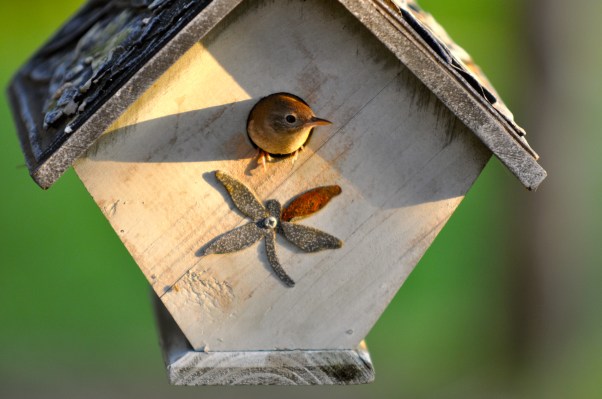
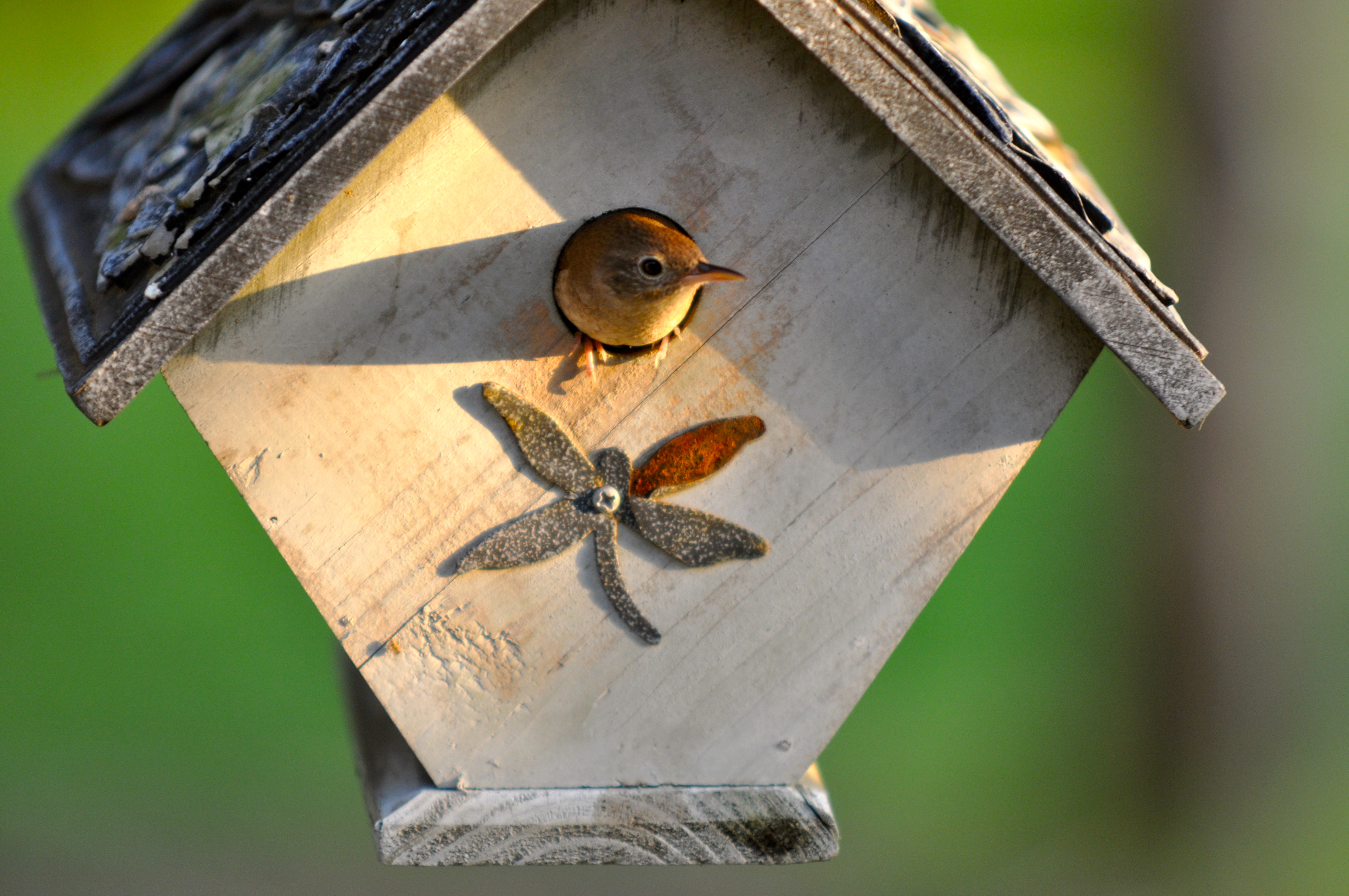
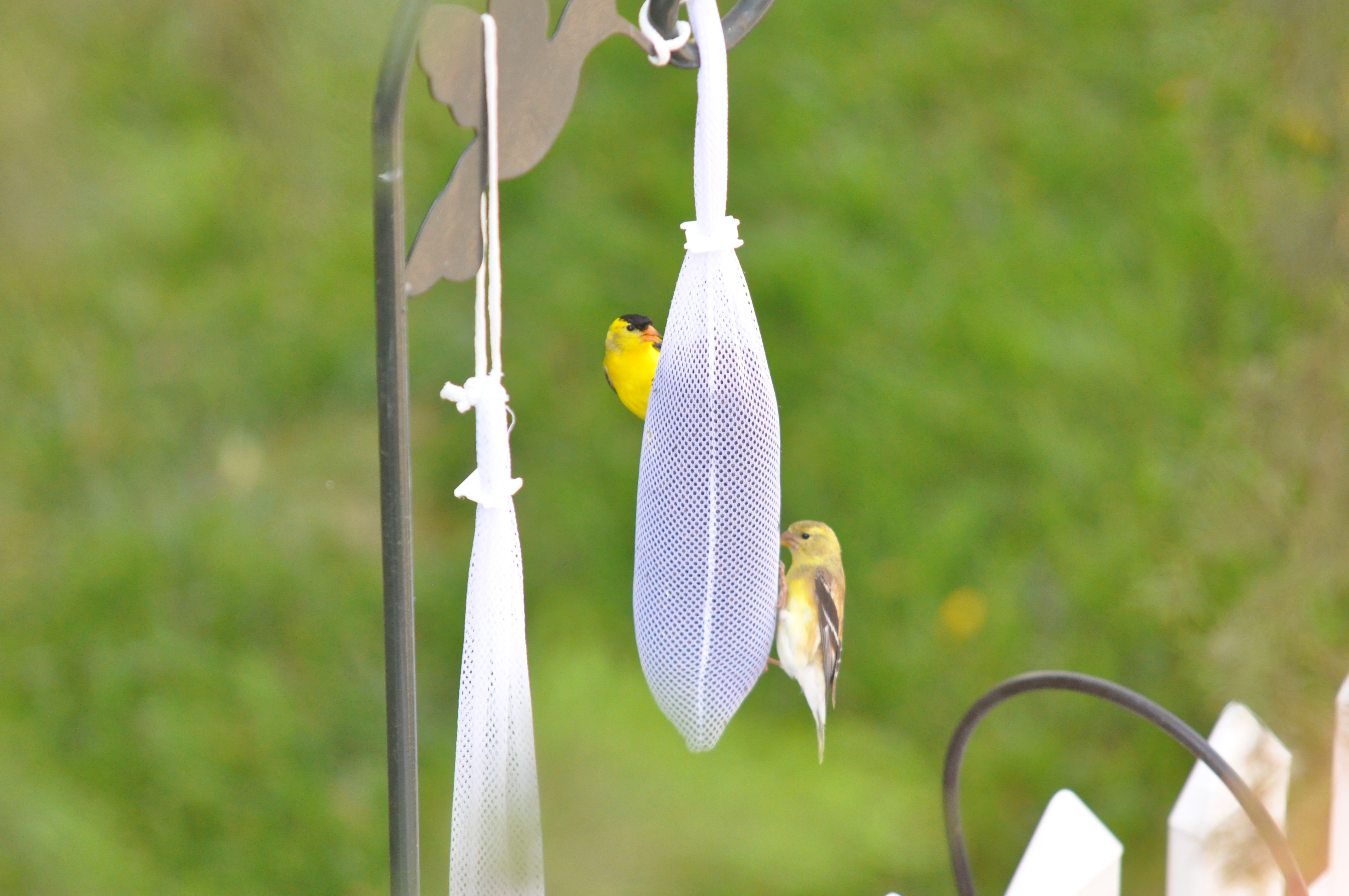
We have a great covered patio, and I think I’ve sat outside more this month than in all the months we’ve lived here combined (about 5 years). I’ve been watching birds build nests, listening to them sing, and feeling the breezes blow. I’ve enjoyed sharing this time with Greg, my college-age son who has been home more, and of course, Lily and Larry. As I’m sitting here finishing this, I see 7  Goldfinches, an Indigo Bunting, two Cardinals, a Red-bellied Woodpecker, and two Wrens who live in the birdhouse you’ll see pictured below. I’ve named them Henry and Harriet. They seem like a great couple! I wonder if they’ve done much decorating in their house…

There’s no place like home.

Windy day!

Trying to get Lily and Larry to pose.

We’ve had enough of this!

Coping with Chronic Illness…Compassionately

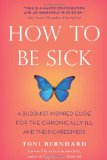
Although Toni Bernhard’s book is called How to be Sick, I found it a lovely and poignant read on how to live, regardless of one’s health status.

Toni was a law professor at the University of California–Davis when she became ill on a trip to Paris in 2001. At the time, she was diagnosed with an acute viral infection–“the Parisian flu” they called it. Unfortunately, she never got better. Amazingly, she wrote How to be Sick from her bed using a laptop. The book won the 2011 Gold Nautilus Book Award in Self-Help/Psychology and was named one of the best books of 2010 by Spirituality and Practice.

Toni has not recovered her health, but her spirit remains strong. She writes regularly for Psychology Today and generously donates her time and wisdom. I was so excited when she graciously agreed to be interviewed for my blog.

When do you accept your pain or health condition as is, and when do you keep trying new approaches?

In my opinion, we have to do both. Acceptance is not the same as indifference or resignation, which carry aversion with them. Acceptance to me is an opening of the heart to the difficulties we face and being able to say, “This is how things are right now” even if “how things are” is difficult. I try to accept how I am AND continue to pursue new treatments. But I’ve learned a lot in the past eleven years about having to pick and choose skillfully among those treatments.

First, of course is the cost. I’ve spent so much money on failed treatments that it’s been a strain on our budget. At the point when the strain outweighs any benefit I can foresee, I stop (I did this recently with the third Chinese herbalist, even though he’s one of the most respected herbalists in the world).

Second, I’ve had to learn to not just jump at every treatment option, but think about it carefully and see if it’s at all reasonable. I used to try everything. Now, I’m very careful.

So, you have to find a middle way — but to me, acceptance of how you are now AND continuing to pursue treatments are not in conflict with each other.

I have also gone through periods where I’m just too exhausted to keep an eye out for treatments. I just retreat, as if I’m in hibernation, and that seems to be good for me sometimes too.

How do you have self-compassion when you’re feeling sick and tired?

I always tell people that the single most important thing they can do is to be kind to themselves. I look at it this way. We control so little in our lives, but the one thing we can control is how we treat ourselves. I see no reason for us not to be as kind and gentle with ourselves as we can be. It’s not our fault that we have health problems. We’re in bodies and they get sick and injured. It will happen to everyone. This is how it’s happening to us. I’ve had so many people write to me and say the single most important thing they got out of my book was to give up the self-blame and forgive themselves for being sick or in pain. Many people have said they didn’t even realize they hadn’t forgiven themselves until they read How to Be Sick. Those emails always touch me so much — just to know I’ve been of help to them.

I really think it helps to speak to yourself with words of self-compassion — to find just the right words for the moment: “It so hard to be sick yet another day.” I said to my husband yesterday, “I’m sick of being sick.” But, instead of “feeding” that thought with stories I spin: “I’ll never get well.” “I’ve been cheated of eleven years of my life,” I’ve learned to just let myself feel “sick of being sick” and speak to myself kindly about it. It’s natural for that emotion to arise so I try not to make it stronger by feeling it with worse-case-scenario stories. Instead, I’m just gentle with myself until the emotion passes — as it will.

How do you deal with uncertainty and unpredictability that goes along with chronic illness?

I use what I call “weather practice,” which I describe in my book. It was inspired by the movie, The Weather Man, which takes us inside the meteorologist’s craft where we see that the weather is unpredictable and ever changing. I use this as a metaphor for life. It helps me hold painful physical symptoms and blue moods more lightly. I can’t predict when they’ll arise but I know for sure that they’re just blowing through, like the wind. It makes it easier to wait them out. It applies to what happened yesterday when I suddenly got that “sick of being sick” feeling. I wasn’t expecting it to descend on me but it did. So I let it be there, knowing that it was an arising and passing mood. Sometimes, I do something particularly nice for myself — put on a movie — until the mood passes.

I also like to remind myself that uncertainty and unpredictability can work in my favor. We assume they’ll be a source of stress, but they could also mean that something unanticipated but wonderful is just around the corner. So, I like to remember that these two can be our friends.

How do you pace yourself (not doing too much on good days, then paying for it later)?

Now you’re asking about something I’m not very good at doing. I get off the hook a bit because my symptoms are pretty consistent from day to day — relentless you could call them. So for me, it’s not a question of overdoing it on a good day v. a bad day, but of overdoing it when something I enjoy is going on — like my son and his family coming up for the day from Berkeley. I try to pace myself but usually overdo it anyway. Then what do I do? Self-compassion again! There are some limits to which I can’t stretch myself, but visiting in the living room for longer than I should is one of them. And so I do it, and accept that paying the consequence was worth it.

How do you deal with anger?

I’ve been angry about my inability to be with my family more than I can. Sometimes, I do have to leave the living room and it’s hard to listen from the bedroom to all the laughter and good times I’m missing. But I’ve learned that getting angry doesn’t get me anywhere. It certainly doesn’t allow me to visit longer. All it does is increase our suffering.

Anger will arise. Don’t be upset with yourself for getting angry. It’s a natural response to your situation. The question is, how can you respond skillfully to it so as to minimize the suffering it causes. Here’s what I do. I note that it’s there, often by labeling it, “Feeling angry” or “This is what anger feels like.” I don’t get angry at myself for being angry — that’s just a judgment that makes the anger worse. In fact, I try to treat it like a guest I know well — an uninvited one perhaps, but still a guest. I find if I do this, it doesn’t fester and grow stronger. Then I look for what’s behind the anger. Almost always it’s some form of desire — I’m not getting what I want or I’m getting what I don’t want. It’s that “want/don’t want” I refer to in the book.

Just finding the desire that’s the source of the anger often loosens its grip on me, because I know, deep down, that we simply can’t fulfill all our desires and that if I continue to be angry about it, it will only make me more miserable and, in the end, won’t get me what I want. So, with this awareness that anger is present and that it’s because of a desire I can’t fulfill, I just let it be. Just sit with it. Just let it be until it gradually changes, weakens, and passes out of my mind. This is one of the ways in which the law of impermanence can be our friend!

Again, I’m so thankful to Toni for sharing her wisdom.  

To soak up more of Toni’s inspiration, click here.

Yo Soy (I Am)

Jody

How many of us have parts of ourselves that we don’t like? Maybe a part of our appearance (My thighs are too fat)? A part of our heritage (I hope I don’t turn out like crazy Aunt Jane)? Or a part of our personality (I’m too quiet)? Disowning any part of ourselves can be damaging. I think the subtitle of The Gifts of Imperfection by Brene´ Brown says it all: “Let go of who you think you’re supposed to be and embrace who you are.”

My niece, Jody, recently told me about an assignment she had for a class in college. They were instructed to write an “I Am” poem. Apparently, that was about the only guideline they were given. It was very unstructured and loose. She gave me permission to share her poem. I love it, not only because she’s my niece, but also because it’s such a great example of looking at all aspects of ourselves with a nonjudgmental, accepting eye. This is just how it is. This is who I am.

I’m planning on writing my own “I am” poem. If you write one, feel free to share it. Oh, and I’m sure my niece would appreciate any comments!

Yo Soy

I am curly hair that people use to categorize me.

I am the city girl stuck in a population of one-thousand.

I am the salsa heels that dance all night as if I’m still in Mexico.

I am the race with no ethnicity.

I am off-brand clothing among Sevens, Coach, and Marc Jacobs.

I am the only Jew in a rural town.

I am high-top sneakers from a resale shop.

I am the life-changing trip to Israel at age 16.

I am the passion to travel and master new languages.

I am the positive voice in a room full of negativity.

I am an ally for all people because I feel we are all connected.

I am the girl that values herself more than how boys see her.

I am the dreams that can and will be reached through hard work and dedication.