
 Why do I have chronic pain? It’s a question I’ve wrestled with for years now. I’ve been to surgeons who told me they could cure me, so I’ve gone that route–two back surgeries, one cervical and one lumbar. I’ve had a world-renowned physician tell me I had thoracic outlet syndrome (see this lovely post by my husband). I’ve had a physical medicine doctor tell me I had too little muscle between my shoulder blades and needed to work out more. (Well, I’m stronger but I still have pain.) I’ve tried physical therapy. I’ve tried massage. I’ve taken supplements and tried acupuncture. Recently I’ve had a doctor bring up the possibility of fibromyalgia.
In addition, being the psychologist that I am, I’ve explored every mental aspect of this pain thing. I’ve been to therapists and psychiatrists. I’ve read books that said I needed to release some anger. I’ve learned to meditate and manage my stress. I’ll latch on to one theory, only to find another, and chase that one like a dog chasing after a rabbit. It’s exhausting, and not very productive.
Sunday I was having a bad day and the ruminating began. Why am I in more pain today? Did I sit too long in one position? Did I type too much? Did I work out too hard? Am I stressed out about something?
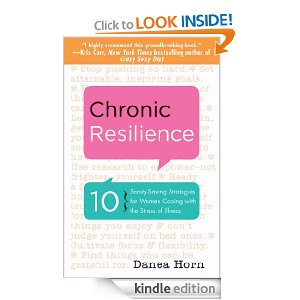
I tried to distract myself from my worry by surfing the Internet, and I stumbled across a soon to be released book called, Chronic Resilience: 10 Sanity Saving Strategies for Women Coping with the Stress of Illness by Danea Horn. Thanks to Amazon’s “Search Inside” feature, I was able to read some of the first chapter. It was so what I needed!
The author has a chronic health condition and had gone through similar soul searching. She writes, “I searched my psyche for feelings and thoughts that needed to be healed. I prayed to increase my faith…I read book after book, until I had a bookcase filled top to bottom with answers, none of which seemed to miraculously fix what I envisioned as broken.” Years later she asked herself, “Why am I still dealing with the same crap I’ve been dealing with for years?” (I really relate to that question!)
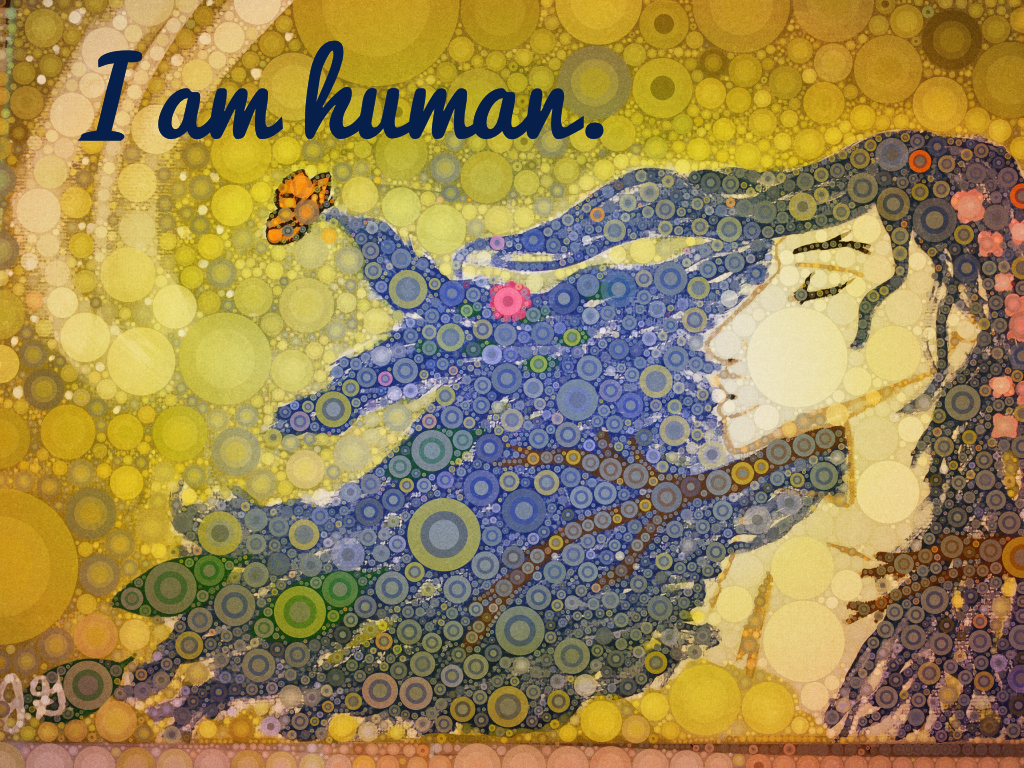 Then it hit her. The answer was simple: She realized that she was human. We come into this world with bodies that can get sick, experience pain, and eventually die. We do anything to resist these truths. We want to think we have more control than we do. She writes, “Each page I turned in all those books was a search for how to get out of being human.”
Of course, I know this. Yeah, I’m human. We’re all human. But somehow, reading her words, it hit me in a profound way. I didn’t cause this. I didn’t wake up one day and say, “Hey, I think I’ll spend the next seven or eight years going to doctors, having surgeries and taking pills.” I think far worse than the pain has been the questioning of my sanity. (Although I do remember feeling kind of oddly disappointed when my last therapist told me I was normal–just a normal person with chronic pain.)
So, I am super excited to get her book (official release day is tomorrow, August 1). I love the title, Chronic Resilience. When I first became interested in psychology, I wanted to know what made people go crazy. The more I learned, my question became, “Why don’t more people go crazy?” Life can be hard, yet people survive, and even thrive. From reading the sample on Amazon, reading an interview she did, and looking at the table of contents, the idea isn’t that we have no control. The idea is to let go of asking “Why?” and instead focus on, “What can I do that’s useful?” And for me, I think all this psychoanalyzing has gone too far. The next time I get stuck in a worry groove asking “Why?” or “What have I done?”, I’m going to gently tell myself, “Hey, you haven’t done anything wrong. You’ve already got the answer. You’re human.”
Ahhh. To use Danea’s words, I can feel “all of the cells in my body let out a collective sigh of relief.”
Please join me on Facebook. There’s a button over on the side, but no one ever sees it.

 The Self-Compassion Project