Embrace Change

I hadn’t done a craft project in months, thanks to my companion, chronic pain. But a project was SO calling me, it was worth the inevitable flare.

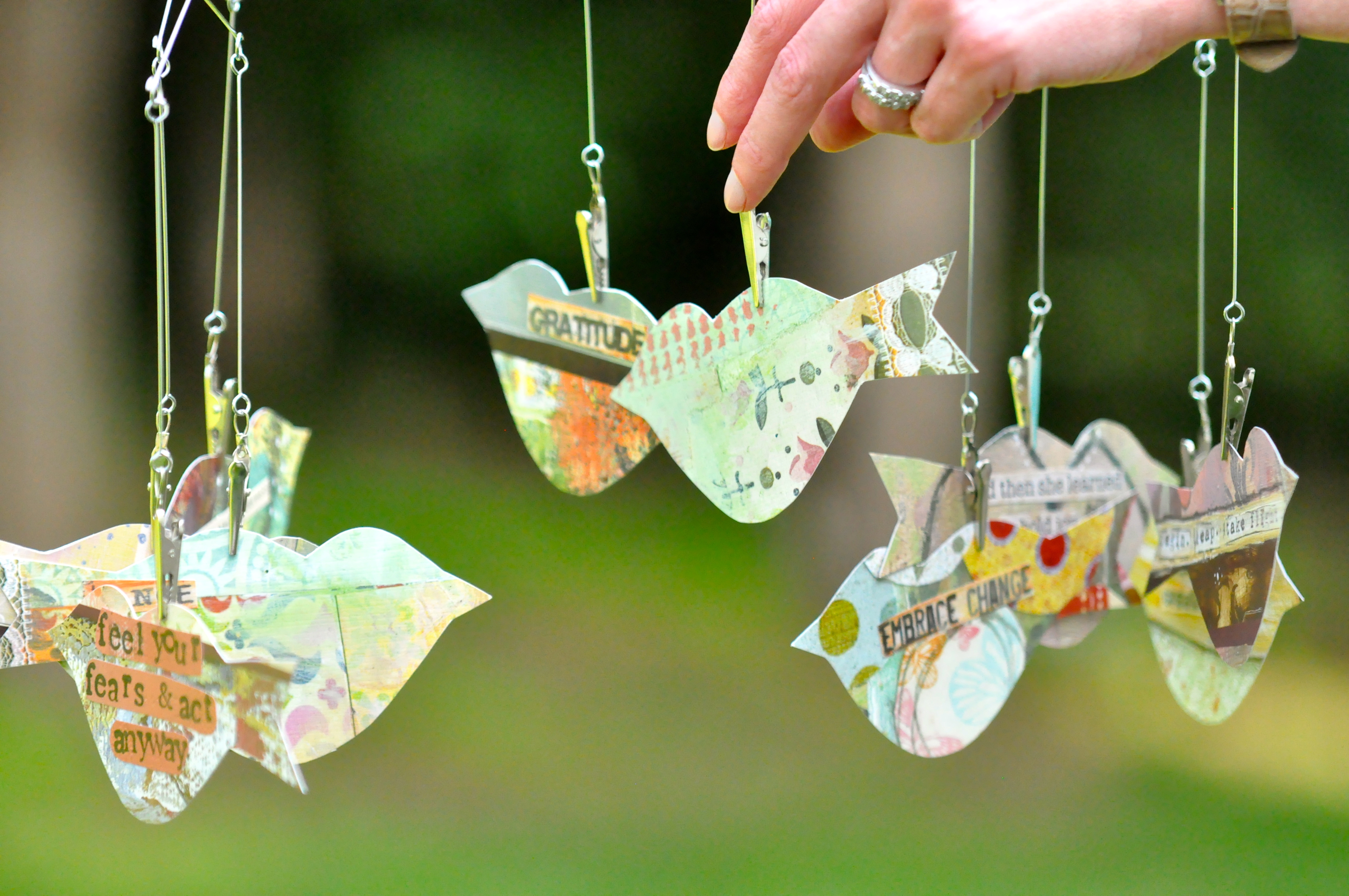
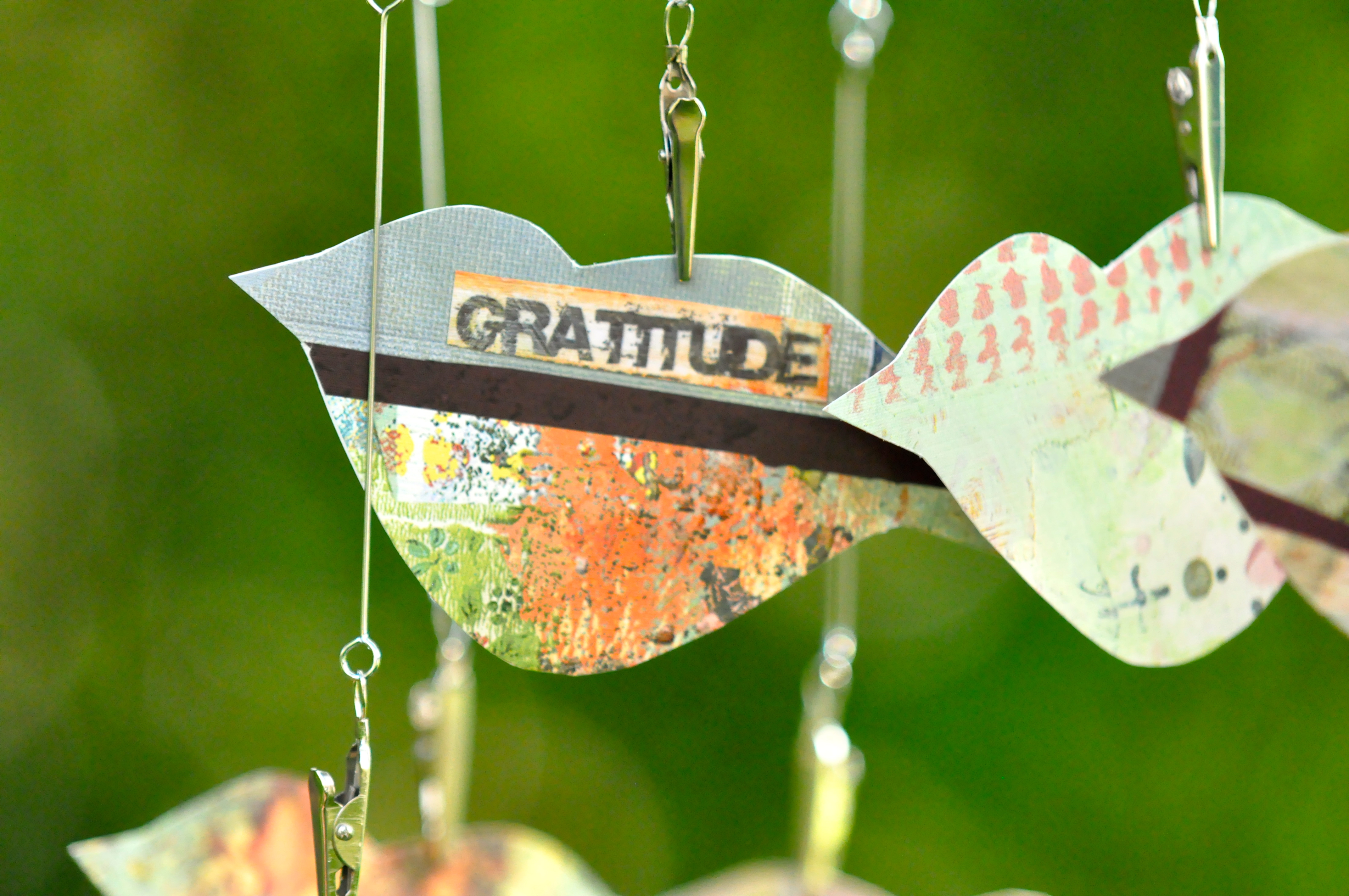
For Mother’s Day, Greg and Jesse gave me a mobile that you attach photos to. When I saw it, I immediately had an idea in my mind of what I wanted to do. (For some reason I didn’t want to simply attach photos to it.)  I ended up cutting an old Kelly Rae Roberts calendar into bird shapes. I had to do one bird, then stretch, take a break, and maybe an hour later do another bird. It was kind of frustrating because I don’t like having to break the flow. But I’m getting better at pacing myself – well most of the time. I don’t have to give up the things I love, but I do have to change the way I go about them. So this project took me several days, but I love how it turned out.

Another thing I hadn’t done lately is do a photo shoot with Greg. We took the mobile outside in our backyard and I gave him instructions that I wanted “lots of green twinkly things” in the background. The only issue is that we have new neighbors and they’re frequently outside. I feel kind of self-conscious doing all the weird photo things we do out there. The weekend they moved in I was throwing colored tissue paper in the air.

I also had him take a picture of me in my new glasses. I’m still trying to get used to the 51-year-old me. I think I look much better without glasses, but that’s not an option anymore. So here’s to embracing change, and trying to do it gracefully.

DSC_0018

Embrace Change

DSC_0019

Begin. Leap. Take Flight.

DSC_0030

DSC_0006

and then she learned to hold joy in her heart
DSC_0017

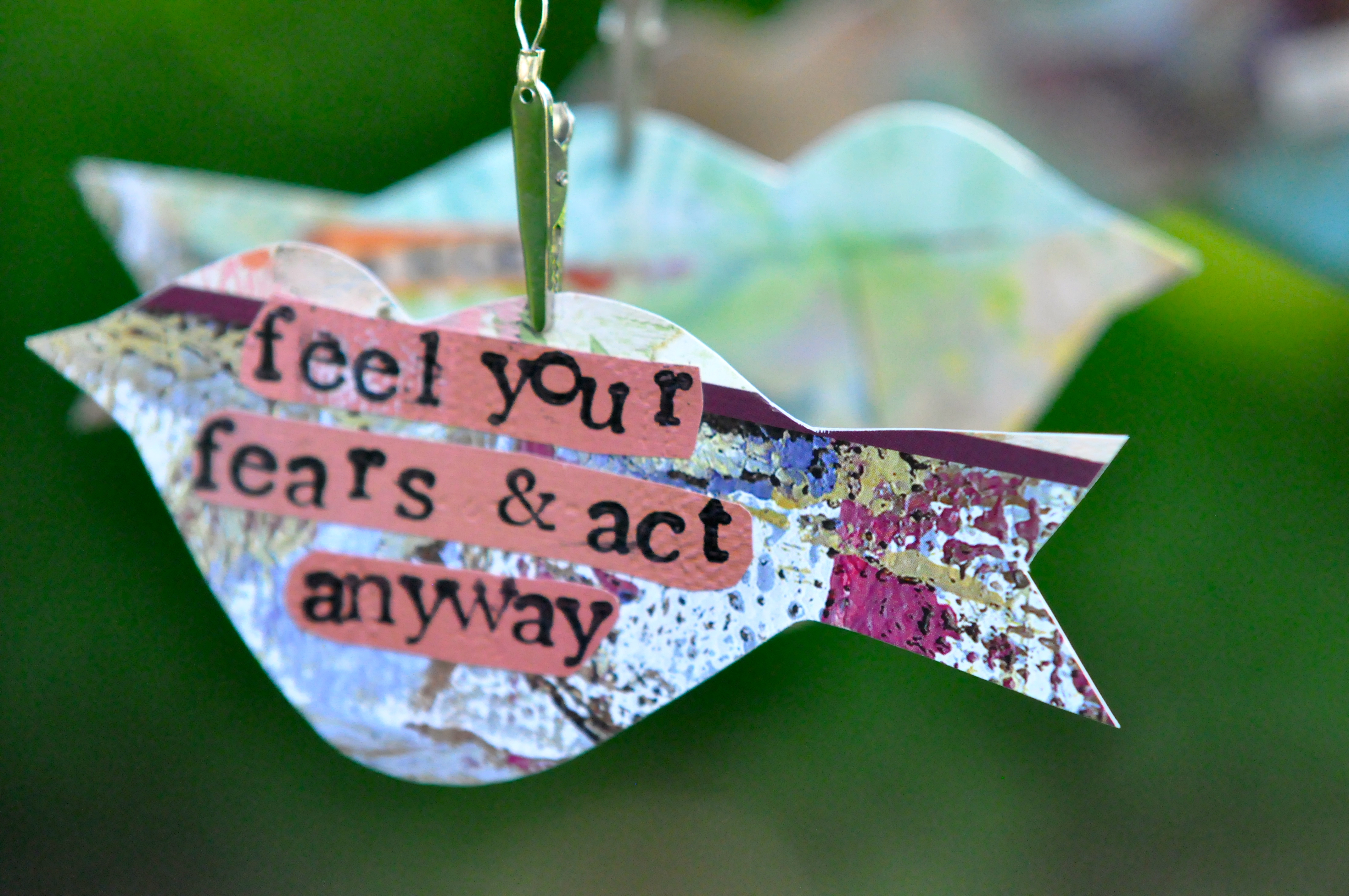
feel your fears and act anyway

DSC_0020

Shine

DSC_0023

Gratitude

DSC_0004

Sunset Mind

I had grand plans to write about every episode of The Self-Acceptance Project offered by Sounds True. Well, that didn’t happen. But today I did have time to watch the episode* featuring psychologist Steven Hayes, Ph.D., one of the co-founders of Acceptance and Commitment Therapy (ACT). I took away a lot of good stuff I want to share with you.
7993149186_8c5d7a7fbe_z1. Sunset mind. Our brains have the capacity to critically analyze situations, which is great. We need that. But critical mind isn’t appropriate when it comes to things like self-compassion. Instead of critical mind, we need sunset mind. Imagine you’re watching a sunset. Do you say, “Oh, that pink just really isn’t the right shade,” or “I think that blue clashes with the purple.” I can be critical, but even I don’t judge sunsets. I admire and appreciate their beauty, their vastness, and all the intricacies of the merging shapes and colors.

New perspective/intention: Try sunset mind when it comes to thinking about myself.

2. Be willing to stand in the hurricane to do what you think is important. Acceptance and Commitment Therapy (ACT-pronounced like the word “act”) is all about taking action in spite of anxiety or discomfort, and doing what you value. I’ve always been good at this when it comes to standing up for others. Here’s an example. I’m typically not one to complain or make trouble, but once when my son was going to see a favorite band, the venue was changed on short notice. The new place required you to be 21 to enter (and this was his high school graduation present–he wasn’t 21). I called the old venue, the new venue, and worked my way up until I had reached a high-up media person with the band. They weren’t able to get my son in, but they arranged for him to meet the band, hang out at a record store where they were doing a promotion, and they gave him free tickets to the Bonnaroo music festival and be a guest in their tent. I know this story might not seem like a lot, and granted, it’s not like I saved anyone’s life or anything, but I would have never been so assertive on my own behalf. I certainly have the skills to make things happen; why don’t I do this for myself?

New perspective/intention: Be willing to stand in the hurricane to do what is best for myself.

4332176853_c30acde1f4_z3. Emotions are here to be felt. You wouldn’t think this would sound revolutionary to a psychologist, but more often than I care to admit, I spend a lot of energy trying to squelch my emotions. My inner dialogue might sound like this:
  • I’m too sensitive.
  • My feelings are too intense.
  • I don’t want to feel this way.
  • I wish these feelings would go away!

Dr. Hayes pointed out (what I already knew intellectually) that a lot of emotions are painful, but also very useful. They can be clues to what you truly care about. For example, guilt, although unpleasant to say the least, can lead you to correct behavior or make amends with someone. He gave an example of a parent who had been on drugs and let some horrible things happen to his child while he was high. The guilt was intense, but needed to be felt. It led to sadness and loss, and eventually connected the father with the will to “walk a higher path” and be a better father in the future. This was not a quick or easy process, but it started with allowing and experiencing painful emotions.

New perspective/intention: Lean into the painful feelings, and see what they’re trying to tell me. And note to self–do this slowly, gently, and back off when you’re overwhelmed.

You can still hear all of the episodes from The Self-Acceptance Project for free online. This was Episode 22: The Human Capacity to Take Perspectives. Tami Simon speaks with Steven C. Hayes, PhD, Nevada Foundation Professor at the Department of Psychology at the University of Nevada. Steven has authored 35 books and over 500 scientific articles. His career has focused on an analysis of the nature of human language and cognition and the application of this to the understanding and alleviation of human suffering. His work has been recognized by several awards, and in 1992, the Institute for Scientific Information named him the 30th “highest impact” psychologist in the world.

Photo credits: Sunset by Yokopakumayoko via flickr; Hearts by Ladydragonfly via flickr

50 Ways You Can Be Brave Today

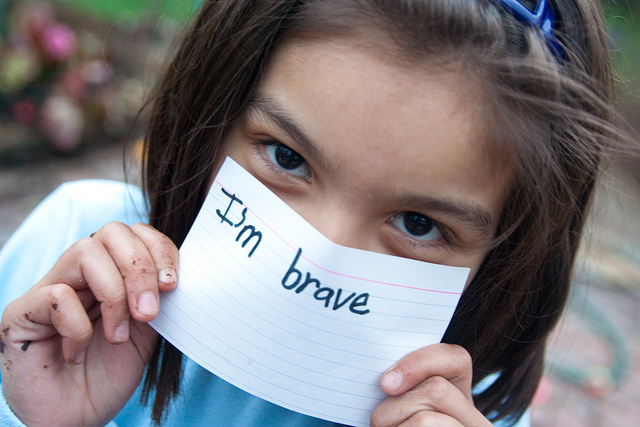
4498182375_9d0e20b102_zSometimes the biggest act of courage is a small one.  ~Lauren Raffo

Bravery isn’t only about heroic acts in unusual situations. It can also be as simple as the risk of trying something new. Here are 50 ideas to get you started.

Allow yourself to feel what you’re feeling.

Let go of people who continually let you down.

Look at yourself in the mirror with kindness.

Tell someone you love him/her.

Preach what’s in your heart.

Write your own story.

Share your thoughts.

Share your opinions.

Don’t wear make up.

Risk being wrong.

Try something for the first time.

Trust your instincts.

Set boundaries.

Put pen to paper.

Sing a song.

Dance.

Play the ukulele.

Try Roller Derby.

Tolerate discomfort.

(bravery doesn’t always feel good)

Make a mistake.

Follow your heart.

Say, “I don’t know.”

Ask for help.

Share your vulnerabilty.

Face your problems.

Let the past be the past.

Allow yourself to be in a photo.

Take a picture of yourself.

Trust your ideas, even the crazy ones.

Stand up for someone who is being picked on.

Leave an abusive relationship.

Say goodbye to your gremlins.

Be your own beloved.

Stand up against any kind of prejudice.

Say no to the things you don’t want.

Say yes to the things you want.

Wear something ridiculous just because you like it.

Be the first person to reach out after a conflict.

Give a stranger a flower.

Ask someone how they are, and really listen.

Let go of your need to control everything.

Embrace your weirdness.

Don’t react to criticism.

Give someone a hug.

Give yourself a hug.

Say kind things to yourself.

Invite feedback.

Let go of being busy all the time.

Be open to changing courses.

Remember, bravery is not the absence of fear.

Begin again.

Watch this Brave lyric video by Sara Bareilles. It’s so good!

What about you? How have you been brave today?

Join The Self-Compassion Project on Facebook.

Photo Credit: Steven Depolo, via flickr, CC